

Pollen Season Is Here: How to Help Your Itchy Dog Naturally
Spring is on its way. The days are getting longer, trees are starting to bloom and everything feels like it’s waking up again.
Most of us will think that’s lovely, unless you own an allergy-prone dog.
For many itchy dogs, the first sign of spring isn’t the flowers — it’s itchy paws, red skin, watery eyes, irritated ears and that familiar scratch, bite, lick routine starting all over again.
One of the biggest seasonal triggers is upon us: pollen.
What's shocking is that all the pollen released in this photo is from one flower head only!

Have you noticed the yellow dust?
One of the first pollens we tend to notice is pine pollen in August.
You don’t need to look closely - you’ll see the fine yellow dust settling over cars, decks, paths, even forming a yellow film around puddles.
And if it’s landing everywhere outside, it’s landing on your dog too.
Pollen can become trapped in your dog’s coat and sit against the skin. For a sensitive or allergy-prone dog, that extra environmental exposure may be enough to start an itchy reaction.
And this is where understanding the why can make managing pollen season much easier.
Why does one dog react when another doesn’t?
Not every dog walking through the same park will come home scratching.
We like to think of allergies from a whole-dog perspective.
Your dog’s body is constantly dealing with different inputs — food, environmental allergens, household products, stress and more.
For a dog already struggling with sensitivities, adding another seasonal trigger such as pollen can increase that overall load.
Think of it a little like a bucket.
One thing might not cause the bucket to overflow. But when several stressors are happening at the same time, pollen may simply be the thing that tips it over.
The skin is giving us a signal.
Itch, itch, itch
We want to soothe what’s happening on the outside while also asking what might be contributing to the whole problem underneath.
What can pollen sensitivity look like?
Dogs don’t necessarily experience seasonal allergies in exactly the same way.
Keep an eye out for:
· itchy, red or irritated paws
· repeated paw licking or chewing
· red patches or rashes
· watery or irritated eyes
· irritated ears
· scratching, biting or licking particular areas
Paws are particularly vulnerable because they’re in direct contact with the ground, grasses, dirt and pollen.
And once your dog starts licking them, you’ve got moisture and saliva added to already irritated skin.
That’s when a small problem can quickly become a much bigger one.
The itch–scratch cycle is what we want to stop
An itchy dog isn’t trying to make their skin worse.
They’re simply trying to get some relief. Scratch, bite, lick, scratch again.
Unfortunately, all that activity can further irritate the skin. Dirty paws irritate already sensitive areas, constant licking keeps the skin damp, and small red patches can become larger, angrier areas surprisingly quickly.
So one of our biggest pollen-season rules is:
Act early.
Step 1: Reduce the pollen load
This is probably one of the simplest things you can do.
After your dog has been outside, particularly after walks, remove as much pollen and environmental debris as you reasonably can.
You don’t necessarily need to give your dog a full bath after every walk.
A simple wipe-down can help.
You can make a gentle saline solution using:
1 teaspoon of salt to 1 cup of boiled, cooled water
Use a clean facecloth to gently wipe areas where pollen tends to collect, including the:
· paws, coat, face, bellies and underarms
Or/and use a simple paw dip.
Pop some saline water or saline solution into a bowl, dip each paw individually, then gently pat them dry. The drying part matters too. We don’t want to leave sensitive paws damp.

Step 2: Soothe the skin before the scratching takes over
Cleaning removes pollen, dirt and debris, but if the skin is already itchy, they’ll want to relieve it themselves.
This is where Eezapet can provide some extra support.
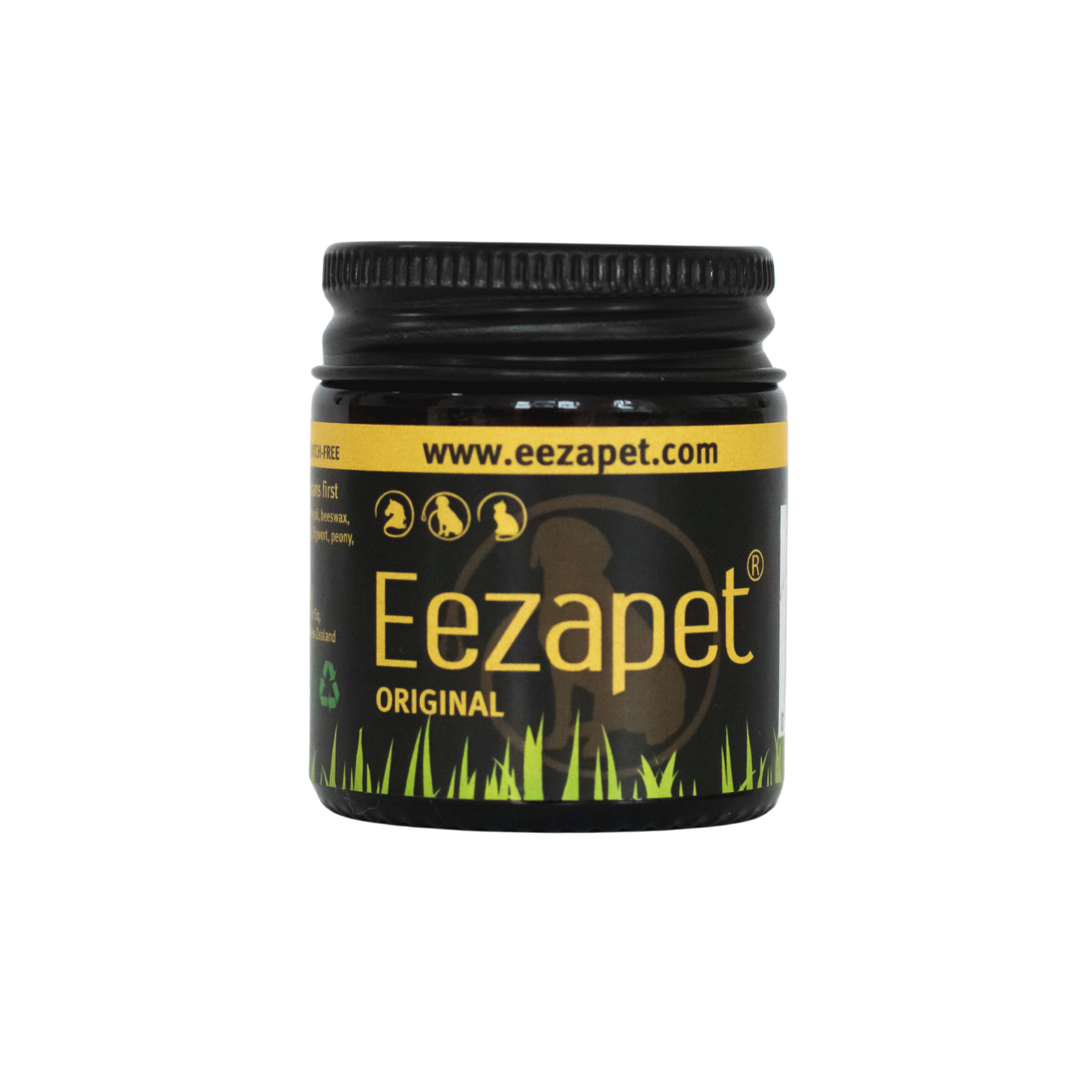
Eezapet is our 100% natural topical balm designed to help soothe itchy, irritated and reactive skin.
Apply a small amount directly to areas showing the first signs of irritation.
Remember, a little goes a long way.
The aim is to soothe and support the skin whilst breaking the itch/scratch cycle.
And because Eezapet is safe to use on broken skin, you can continue supporting those areas if your dog has already scratched themselves raw.
Step 3: Think BEFORE the walk too
If your dog regularly struggles with itchy paws don’t just wait for the reaction.
Use Eezapet as a pre-walk barrier.
Apply a small amount to vulnerable areas such as the paws before heading outside.
The beeswax-based balm creates a physical barrier on the skin, providing another layer of support when your dog comes into contact with environmental irritants.
Then when you get home:
Wash → Dry → Reapply if needed.
For an allergy-prone dog, this routine can become a very useful part of managing spring.
Step 4: Look beyond the pollen
Pollen may be today’s obvious trigger, but we still want to look at the whole dog.
If your dog seems to react strongly every spring, ask what else might be contributing to their overall load.
- What’s happening with their diet?
- Their gut? (remember 80% of their immunity resides in the gut)
- Are their paws staying damp?
- Have other allergies already been causing problems?
This doesn’t mean making ten changes at once.
Keep it simple.
For dogs with recurring problems, keeping a daily allergy diary can also be incredibly useful. Note where you’ve walked, what your dog has eaten, what they’ve been exposed to and when the itching appears. Looking back can often form a pattern.
Our simple pollen-season routine
If you’ve got an itchy dog, start here:
Before the walk:
Apply a small amount of Eezapet to problem areas if your dog is prone to reactions.
After the walk:
Rinse or wipe paws, muzzle, belly and other exposed areas to remove pollen and debris.
Dry thoroughly:
Particularly between the toes and around skin folds.
Check the skin:
Look for redness, licking, little spots or the beginning of a rash.
Soothe early:
Apply Eezapet at the first signs of irritation rather than waiting for the scratching to escalate.

Look for patterns:
If reactions keep happening, start investigating the wider picture — environment, food, gut health, grasses and other possible triggers.
Don’t wait for the big flare-up
One of the biggest lessons I’ve learnt from living with allergy dogs is that managing the little things early can make life much easier.
You know your dog.
If they suddenly start licking their paws after a walk - don’t ignore it.
If that little red patch appears - take a look.
If pollen is covering your car and deck, it’s covering your dog too- wash it off.
Keep the skin clean and dry.
Soothe irritation early.
And then start looking for the why.
Managing an itchy dog is about reducing the things putting pressure on their system and supporting their skin while you work out what their individual triggers might be.
Your dog is itchy, you’re worried, but most importantly we understand how stressful it can feel – we’ve been there with two allergy dogs - the whole reason we do what we do.
If you need help with the skin, want your dog to stop scratching and want a peaceful nights sleep again have Eezapet in your tool kit.


Leave a comment